


Driving through the panoramic hills of Los Angeles toward Paris Hilton’s home, it quickly becomes clear that interviewing her for a series titled Just Like Us might be a stretch. This part of L.A. is known for housing some of the most extravagant estates in one of the most unrelatable cities in the world and after a 15-minute security check just to access her property, my instincts feel confirmed.
What awaits inside is unlike anything I’ve ever experienced. The sheer scale of the estate is so vast that you barely register the roughly 50 staff members moving seamlessly through the space, each tending to their roles. The 30,500-square-foot mansion marked with a bold “P” for Paris on its roof boasts a five-hole golf course, a pink tennis court, an ice-skating rink, an 8,000-square-foot spa and longevity center, and an on-site office where her 30-person team works daily to build her ever-expanding empire.
I knew Hilton had done well but I hadn’t realized her success had reached this level of opulence.
For many, the name Paris Hilton still conjures an image of someone impossibly unrelatable — the original influencer, a nightlife socialite with a famous last name. But after a very public betrayal involving a leaked sex tape, Hilton did something few expected: she transformed notoriety into opportunity, launching a groundbreaking reality show and ultimately building an entertainment empire now valued at approximately $1 billion.
Today, the 44-year-old mom of two — she and her entrepreneur husband of four years, Carter Reum, also 44, share son Phoenix, 3, and daughter London, 2, both born via surrogate — is a true multihyphenate entrepreneur, with ventures spanning music, fashion, skincare and beyond.
So how could she possibly be Just Like Us? Stay with me.
In recent years, Hilton has evolved in ways the public rarely sees. She has spoken openly about what was happening behind the glitter and glamour — and in doing so, has made meaningful contributions far beyond pop culture. In her 2020 documentary, This Is Paris, she revealed the trauma she endured at Utah’s Provo Canyon School, becoming a leading advocate for survivors of the “troubled teen” industry and helping push forward legislative reform. She has also used her platform for philanthropy, championing causes that support neurodivergent individuals and the LGBTQ+ community.
Now, in her new documentary, Infinite Icon: A Visual Memoir (in theaters January 30), Hilton takes that vulnerability even further. She shares how music quite literally saved her life during her darkest moments offering emotional grounding, easing her anxiety and ADHD, and serving as a powerful therapeutic outlet through its psychological and neurological effects.
She’s a far cry from the young woman I covered in the early 2000s. Today, Hilton is self-aware and articulate, confidently owning her voice with only the occasional slip into the baby voice of her past. With no questions off-limits, we sit together in her craft room, thoughtfully designed to accommodate her ADHD, and talk candidly about old times, fame, money, music, and how she’s raising her children in a world that hasn’t always been kind to her.
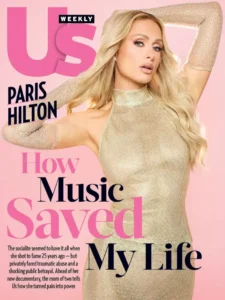 Nino Munoz
What do you hope people take away from your new documentary?
“This feels like the third part of a trilogy. In my first documentary, This Is Paris, I showed people who I am. Then I went even deeper in my memoir. Infinite Icon is my entire life told through the lens of music. Over the past five years, I’ve been on a real journey of self-discovery — learning, healing and growing so much.”
You look incredibly happy when you’re performing on stage.
“It’s the most magical feeling in the world. Seeing everyone in the audience so happy screaming, crying, singing along the energy and love in the room is on another level. When I’m up there, I truly feel like this is what I was born to do.”
A major theme of Infinite Icon is how music saved you.
“I went through so many traumatic experiences as a teenager. When I got out of those boarding schools, I would go out at night to clubs, and music was the one thing that helped me forget the pain. I felt accepted. It was about having an incredible time. I love music, I love to dance, I love the lights, I love the people.”
You returned to music in 2024, releasing your second album in 18 years. Do you feel early fame prevented you from becoming a full-fledged pop star?
“I do. Anyone who did reality TV and then tried to go into music wasn’t taken seriously especially in the early 2000s, when the media was extremely cruel to young women. That was always really hurtful to me. Since I was three years old, I’ve wanted to be a pop star, but my music didn’t get the chance it deserved because the media controlled everything back then. Now, with social media, I’m finally able to hear what fans actually think.”
You’ve been through so much. What was the hardest thing you’ve had to deal with?
“All of it. These experiences will affect me for the rest of my life especially what happened in those schools. My parents were told they were emotional-growth boarding schools, but they were sold a lie. It was terrifying to be around adults who were abusing us in so many ways. It took me years to even talk about it. What happened in those places should never happen to anyone especially a child. I was terrified every single day, not knowing what would happen next.”
Were there moments when you didn’t want to live?
Everyone felt that way. It was like it would be better not to live than to be in these types of places. But it did make me really strong. It almost prepared me for Hollywood.
Was there shame attached to it?
Definitely. That’s how they get away with it they shame the kids so much, we were too embarrassed to talk about it. You come out more traumatized than when you went in.
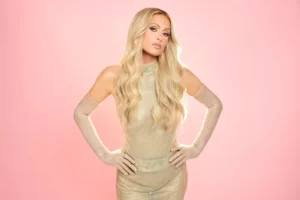 Nino Munoz
Did it make you wary of therapy?
“Yeah. I’ve never had therapy since.”
Even though your parents were in the dark, was it difficult to forgive them for sending you there?
“I knew they had no idea. My mom has been so sad to hear what really happened. She’s been coming with me to Washington, D.C., to speak with other parents. The parents are victims too.”
Thank you for using your voice to help others.
“It’s the most meaningful work of my life. When I was a little girl, I never would have imagined that one day I’d be testifying before Congress — or that I’d help pass 15 state laws and two federal bills to protect children. It makes everything I went through feel worth it.”
The documentary also covers the 2004 release of your sex tape with an ex. What was it like dealing with that?
“To trust someone and have them violate me like that was the most horrible thing. That will haunt me for the rest of my life.”
Have you spoken to your ex since?
“No.”
Would you ever?
“No.”
Have you thought about how you’ll talk to your children about it someday?
“I haven’t figured out what I’m going to say yet. Now that I’m a mom, thinking about it makes me even sadder that I had to go through something like that so publicly, and that people vilified me for it when I was just a 19-year-old kid.”
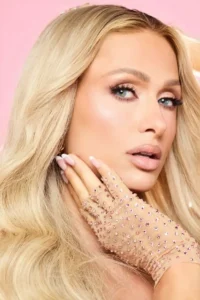 Nino Munoz
The doc also shows some awful headlines about you from those days, like: “Famous for Nothing” and “No Brains, All Fame.” How did that feel when it was happening?
It was really hurtful. I was just a young girl living my life, but I had the whole world watching and judging and picking everything apart.
What would you say to the people who wrote them?
“Look at me now, honey.” I’ve always loved proving people wrong. I’ve been underestimated and misunderstood. I’ve had so many reporters and people on the street apologize to me.
How do you manage to stay positive?
No matter what life throws at me, it makes me stronger. It made me resilient. I can make it through anything.
Ever wish you weren’t famous?
Even though it’s been so difficult, I try to think about all the beautiful things that come with it. And I see fame as a superpower to make people happy.
Is there one misconception you’re still trying to correct?
I feel like I’ve cleared up so many. [People] thought I was a dumb blonde because of The Simple Life, but I’ve proved that I’m not I’m just very good at pretending to be one.
 Nino Munoz
When you’re recording in the doc, someone says, “You can use your real voice.” You used to have this baby voice, saying [things like], “That’s hot.” Where did that come from?
I can’t even control it. It’s such a part of me now. It was a trauma response to what I went through, where I wanted to build this perfect Disney Barbie character. The Simple Life producers told me they wanted me to play a spoiled airhead. I’m a shy person, so I feel like being the character made it easier to say ridiculous things.
You’ve been open about your ADHD diagnosis. How are you doing?
It’s gotten much better. I know so much about my ADHD now, but growing up, no one was talking about it, especially with young girls. [In] school, I was constantly getting in trouble, not able to focus, failing tests and losing my homework. People with ADHD were called bad kids. Now I know the negative self-talk isn’t true. Anytime that happens, I say, “That’s not you. That’s your ADHD.”
You’ve said it’s your superpower.
I wouldn’t be the woman I am today without it; I wouldn’t be the entrepreneur I am. I want to inspire others [to know] it can be a superpower.
What do you say to people who feel you’ve had it easy because you come from money?
I’m very privileged [to have come] from a family where I’ve been able to learn so much from such incredible businessmen and women. But I’ve seen a lot of people who come from prestigious families, and… they’ve never worked a day in their life, and I’ve seen how unhappy they are. They have no fulfillment in life because they’re just handed everything.
Does money equal happiness to you?
It does because I’ve worked so hard, and success has always been a driving force for me. [After] going to those schools, I made a promise that I was going to become so successful that no one could ever tell me what to do again. So I really see it as freedom.
How much help have you had from your parents?
I haven’t gotten anything since I was 18. I’ve been working since I was 16. I did everything on my own.
Have you figured out how much support you’ll give your kids?
 Nino Munoz
How happy are you being a mom?
[My kids] are my everything. I’ve always wanted to be a mom and now [I have] these two little angels who are [so] fun, and sweet and smart.
What’s Carter like as a dad?
He’s so sweet and fun and gentle and an amazing dad. They love him so much. We’re the best parents.
You guys have a pink tennis court. How does Carter really feel about your interior design?
He loves it. He loves anything that will make me happy.
How did you know he was The One?
I can look in someone’s eyes and see whether they’re a good person or not. When he looked at me and smiled, I could tell there was something special about him. He has incredible family values, and he’s kind, patient, loyal, funny and loving and lifts me up in a way that no one ever has before.
You revealed you have 20 boy embryos on ice. Do you want more kids?
I love having two, but you never know. Maybe there will be another brother one day. Or if someone in the family needs one, we have lots of boys.
What’s Grandma Kathy [Hilton] like?
Don’t call her Grandma. [Laughs]. She’s Kiki, and she’s the cutest. The kids love when she’s over.


Leave a Reply