


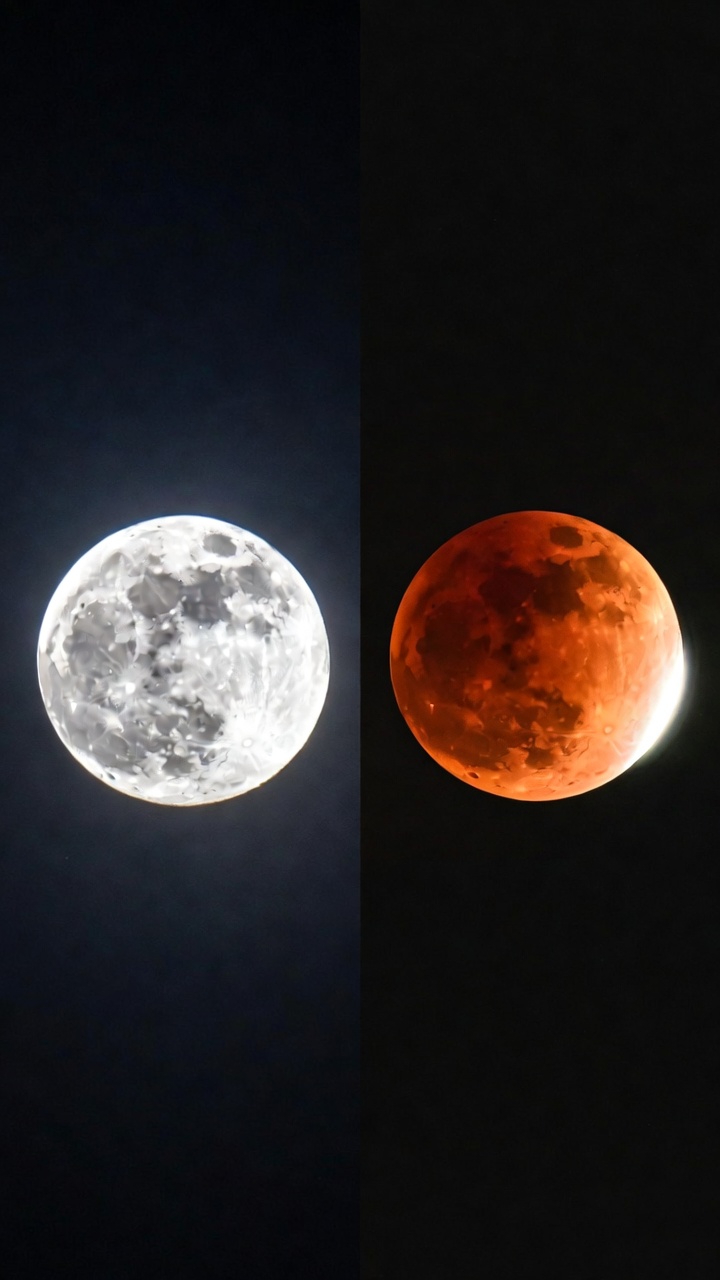
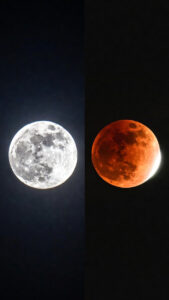
On the night of March 3, 2026, the full Worm Moon will plunge into Earth’s shadow for a total lunar eclipse, transforming into a deep, coppery-red “Blood Moon” during a generous 58-minute totality; one of the longest and most accessible lunar eclipses in recent years, inviting sky watchers worldwide to step outside and witness nature’s quiet, powerful spectacle.
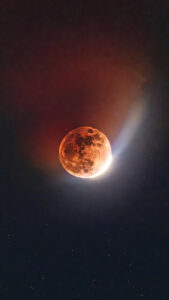
This celestial event occurs when the Sun, Earth, and full Moon align precisely, with Earth blocking direct sunlight from reaching the Moon. Instead of disappearing into darkness, the Moon takes on an eerie reddish hue as sunlight bends through Earth’s atmosphere. Shorter blue wavelengths scatter away, leaving longer red and orange tones to illuminate the lunar surface; exactly the same process that paints sunrises and sunsets fiery colors. The result is a “Blood Moon” that glows steadily for nearly an hour, offering plenty of time to observe the transformation, enjoy the serene beauty, and feel the wonder of our place in the cosmos. No telescope, binoculars, or special filters are required; just clear skies, an open view of the Moon, and a willingness to look up. With totality lasting 58 minutes and the entire eclipse spanning over five hours, March 3 delivers one of the most viewer-friendly lunar eclipses of the decade. Don’t miss it; who’s planning to watch
How a Total Lunar Eclipse Works
A total lunar eclipse can only happen at full moon, when the Moon lies opposite the Sun and passes through Earth’s shadow. The shadow has two components:
- Penumbral shadow: The faint outer fringe, causing gradual dimming.
- Umbral shadow: The dark central cone, where totality occurs
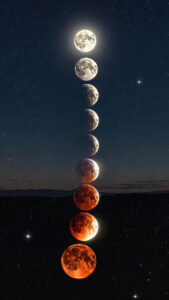
During totality, the Moon receives no direct sunlight, but Earth’s atmosphere acts as a natural filter. Red light bends around the planet’s curve and reaches the Moon, bathing it in coppery or brick-red tones. The exact color varies; clean air produces brighter orange-copper; dust, smoke, or volcanic aerosols can darken it to deep red or even brownish-gray.
This eclipse is relatively shallow (umbral magnitude ~1.15), meaning the Moon passes through the upper part of the umbra rather than the densest core. As a result, it remains fairly bright and distinctly reddish rather than very dark or nearly invisible.
The full timeline (in UTC; convert to local time):
- Penumbral eclipse begins: ~08:44 UTC (subtle dimming starts)
- Partial eclipse begins: ~09:50 UTC (dark bite appears on Moon’s edge)
- Totality begins: ~11:04 UTC
- Greatest eclipse: ~11:34 UTC (deepest red phase)
- Totality ends: ~12:02 UTC (58 minutes’ total)
- Partial ends: ~13:16 UTC
- Penumbral ends: ~14:22 UTCWhere and When to Watch the Blood Moon
The eclipse is visible wherever the Moon is above the horizon during totality or partial phases. Prime viewing regions include:
- East Asia (including Japan): Evening to late-night views, with totality occurring during prime dark hours.
- Australia and New Zealand: Excellent evening spectacle, Moon high in the sky during totality.
- Pacific islands: Full coverage during nighttime.
- Western North America: Early-morning viewing (e.g., totality ~3:04–4:02 a.m. PST in California, Moon high before dawn).
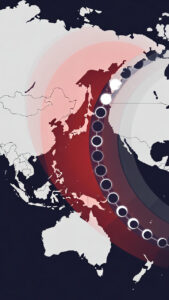 Eastern North America, Europe, Africa, and much of South America will see only faint penumbral dimming or miss the event entirely, making it more special for those in the prime zones.
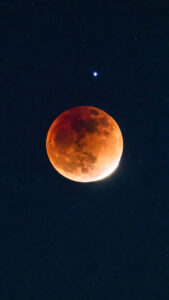
The Moon will be positioned near Regulus in Leo, adding a bright golden star to the scene; the red Moon contrasted against sparkling stars creates a particularly striking visual.
No special equipment needed: naked-eye viewing is ideal for the overall color and drama. Binoculars or a small telescope enhance crater details under the red light and reveal subtle brightness variations across the disk
Tips for the Best Experience
To make the most of March 3:
- Find a dark location with a clear view of the Moon (east or southeast horizon depending on your region).
- Arrive early to watch the partial phases; the slow creep of Earth’s shadow across the Moon builds anticipation beautifully.
- Dress warmly; nights can be chilly during long outdoor watches.
- Bring a blanket, hot drink, and perhaps friends or family; the shared wonder multiplies the magic.
- Use apps like Stellarium or Sky Safari for exact local timings and Moon altitude.
- Check weather forecasts; clear skies are essential.
If clouds intervene, many observatories and astronomy groups will stream live views online.
Why This Eclipse Feels So Special
Total lunar eclipses happen roughly twice per year somewhere on Earth, but each one carries its own character. The 58-minute totality here gives ample time to observe gradual changes in color and brightness, enjoy the peaceful red glow, and reflect on the cosmic alignment. The proximity to Regulus adds extra sparkle, turning the night into a quiet celestial portrait.
This is the last total lunar eclipse with broad visibility until late 2028–2029, following a packed 2026 eclipse year that included the February annular solar eclipse. Moments like these remind us how interconnected we are with the universe; three celestial bodies aligning perfectly to create a global spectacle.
Culturally, blood moons have inspired awe, myths, and storytelling for millennia. Today, they remain pure astronomical beauty; opportunities to pause, look up, and feel small yet connected.
As March 3 approaches, set reminders, check your local Moonrise time, and prepare your spot. Whether you’re watching from Australia in the evening or western North America before dawn, the experience is universal: a red Moon hanging in silence, painted by Earth’s own atmosphere.
Step outside, look up, and let the sky paint itself red. Who’s watching? Moments like this remind us how amazing our universe truly is; clear skies, cosmic wonder, and unforgettable nights await.


Leave a Reply