


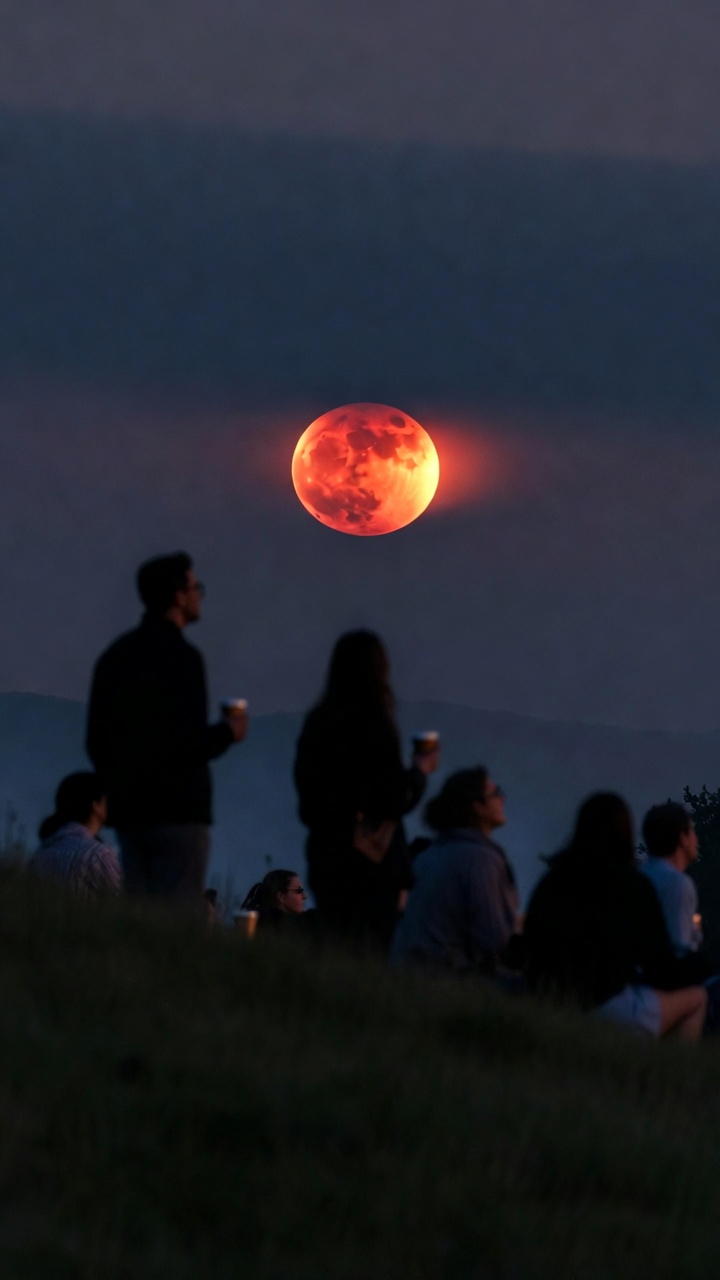
On the night of March 2–3, 2026, the full Worm Moon will slip into Earth’s shadow for a total lunar eclipse, turning the lunar disk a deep, haunting copper-red “Blood Moon” for nearly an hour; offering sky watchers in the Pacific, East Asia, Australia, New Zealand, and western North America a front-row seat to one of nature’s most serene and dramatic celestial displays.
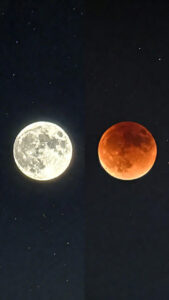
This total lunar eclipse unfolds when the Sun, Earth, and full Moon align precisely, with Earth casting its dark umbra across the Moon’s face. Rather than vanishing, the Moon glows reddish as sunlight filters through Earth’s atmosphere; shorter blue wavelengths scatter away, leaving longer red and orange tones to illuminate the surface, much like the colors of a sunset viewed from space. Totality lasts 58 minutes (11:04–12:02 UTC), with the entire event spanning over 5 hours and 39 minutes. The Moon passes near Regulus in Leo, adding bright stars to the backdrop for an especially striking scene. This is the last total lunar eclipse visible from wide regions until late 2028–2029, making March 2–3 a must-see if skies cooperate. No equipment is required; just clear weather, an open view, and a moment to pause under the transformed night sky.
The Science of a Total Lunar Eclipse
A lunar eclipse occurs only at full moon, when the Moon lies opposite the Sun and Earth passes between them. Earth’s shadow consists of two parts: the faint outer penumbra (gradual dimming) and the dark central umbra (total coverage).
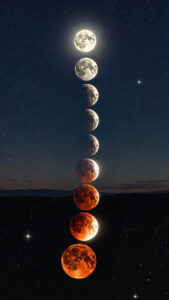
During totality, the Moon receives no direct sunlight, but Earth’s atmosphere bends redder wavelengths around the planet’s curve, bathing the lunar surface in coppery light. The exact shade varies with atmospheric conditions; volcanic ash or dust can darken it to brick-red or even brownish-black, while cleaner air yields brighter orange-copper tones. This eclipse is relatively shallow (umbral magnitude ~1.15), so the Moon stays fairly luminous and distinctly reddish rather than very dark.
The full timeline (UTC; adjust for local time):
- Penumbral eclipse begins: ~08:44 UTC
- Partial eclipse begins: ~09:50 UTC
- Totality begins: ~11:04 UTC
- Greatest eclipse: ~11:34 UTC
- Totality ends: ~12:02 UTC
- Partial ends: ~13:16 UTC
- Penumbral ends: ~14:22 UTC
Where and How to Watch the Blood Moon
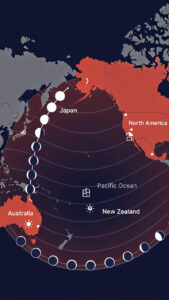
Visibility covers the night side of Earth during key phases, with the Pacific region enjoying the most complete show:
- Best views: Australia, New Zealand, East Asia (including Japan), and the Pacific islands; totality occurs during evening or late night hours.
- Western North America: Prime early-morning viewing (e.g., totality around 3–5 a.m. local in many areas), with the Moon high before dawn.
- Eastern Asia and parts of the Americas: Rising or setting Moon during partial or total phases; horizon views can be dramatic.
- Europe and Africa: Largely miss totality, seeing only faint penumbral dimming or nothing at all.
No special gear needed: naked eyes deliver the full magic, while binoculars or a small telescope reveal crater details under the red glow. The Moon illusion makes it appear larger near the horizon.
Tips for the best experience:
- Find a dark location with an unobstructed view (especially east or southeast depending on your region).
- Arrive early to watch the partial phases build anticipation.
- Dress warmly; nights can be cool during long watches.
- Use apps (Stellarium, SkySafari) for exact local timings and Moon position.
Why This Eclipse Feels Special; and Looking Ahead
Total lunar eclipses occur roughly twice per year somewhere on Earth, but each carries unique character due to timing, color intensity, and sky companions. This one’s nearly hour-long totality provides ample time to observe gradual changes and enjoy the serene red glow. The proximity to Regulus adds sparkle, contrasting the Moon’s ruddy hue against bright stars.
The March 3 eclipse is the last total lunar eclipse with broad visibility until late 2028 2029, following a busy 2026 eclipse year that included the February annular solar eclipse. These events remind us of the precise choreography of Sun, Earth, and Moon; alignments that have awed humanity for millennia.
Culturally, “blood moons” have inspired myths and folklore, but today they stand as pure astronomical beauty; opportunities to marvel at our planet’s atmosphere painting the Moon from afar.
Step Outside and Witness the Transformation
As March 2 3 approaches, set reminders, check forecasts, and prepare your viewing spot. Whether in Australia watching evening totality, Japan catching the rising red Moon, or western North America enjoying pre-dawn drama, the experience connects us across time zones and generations.
Gather friends or family, bring a warm drink, and simply look up. When the Moon turns blood-red, take a moment to appreciate the cosmic alignment, the filtering power of our atmosphere, and the quiet wonder of the night sky.
This rare event invites pause in a busy world; fleeting yet timeless. Don’t miss it: step outside, gaze eastward or wherever the Moon rises, and watch the sky paint itself red. Clear skies, cosmic vibes, and unforgettable nights lie ahead; the Blood Moon is coming.


Leave a Reply