


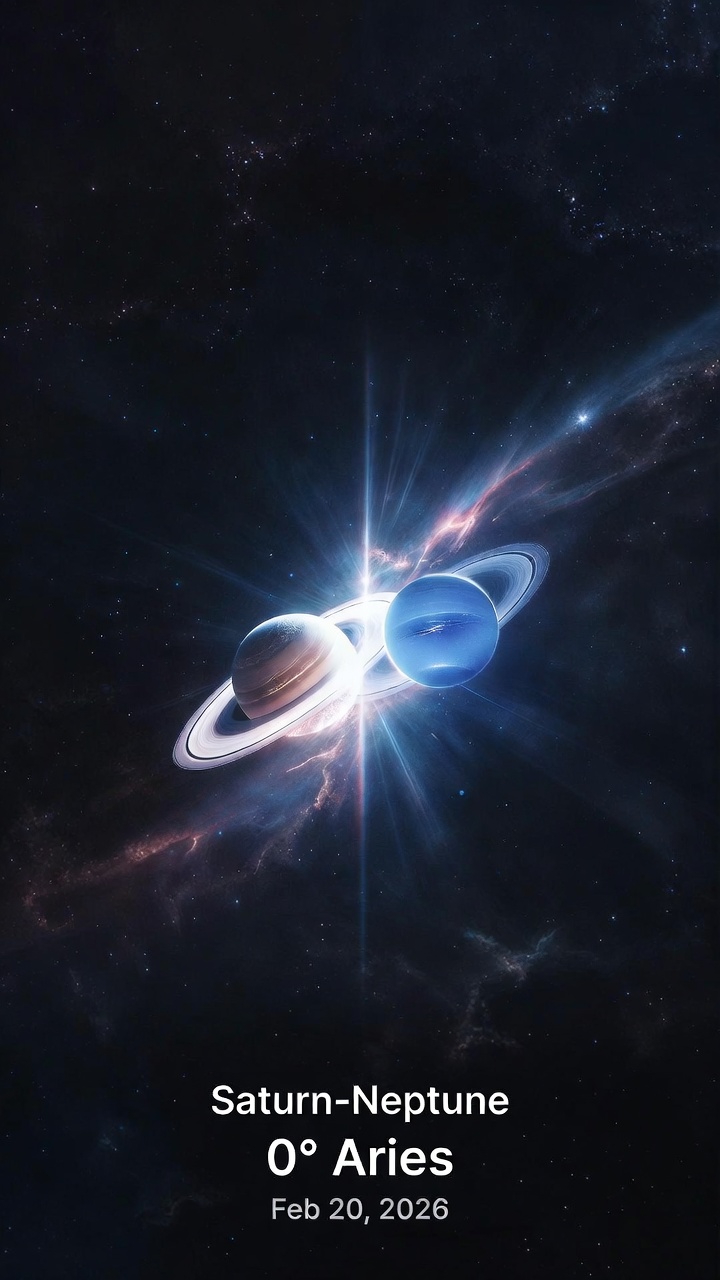
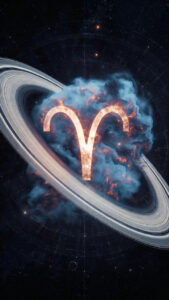
Next week, on February 20, 2026, Saturn and Neptune form an exact conjunction at 0° Aries the “World Point” or first degree of the zodiac marking an alignment astrologers describe as extraordinarily rare, not seen in this precise spot for thousands of years and initiating a profound new cycle for collective structures and dreams
This event blends Saturn’s discipline and boundaries with Neptune’s imagination and dissolution right at the zodiac’s starting line, where new beginnings ignite. While **Saturn-Neptune conjunctions** occur roughly every 36 years (last in 1989), aligning exactly at **0° Aries** the Aries Point, symbolizing fresh starts and global visibility—amplifies its significance dramatically. Astrological sources trace similar exact placements back potentially millennia, with some estimates suggesting over 2,000 years or even 6,000 9,000 years ago, coinciding with eras of major human shifts like early settled societies or philosophical awakenings. We stand at a pivotal threshold: Saturn grounds Neptune’s ethereal visions into tangible reality, while Neptune softens Saturn’s rigidity, potentially reshaping boundaries in society, technology, spirituality, and personal aspirations. Though not a naked-eye spectacle like a planetary parade, it’s a “history in the making” moment visible partially through telescopes or binoculars, but profoundly felt in the broader cosmic narrative.
As February 20 approaches, this conjunction invites reflection on manifesting dreams with discipline. Find Saturn easily in the evening sky, knowing Neptune hovers nearby, and ponder the new era dawning.
Understanding Saturn-Neptune Conjunctions: The Core Dynamics
Saturn represents structure, responsibility, limitations, and long-term achievement think of it as the architect enforcing rules and building enduring frameworks. **Neptune**, in contrast, governs dreams, intuition, spirituality, illusion, and dissolution evoking the artist or mystic who blurs boundaries and inspires transcendence
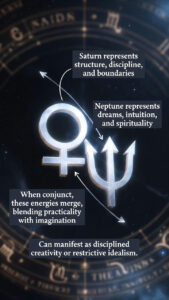
When these two meet in conjunction, their energies merge: Saturn can crystallize Neptune’s visions into practical forms, or Neptune may erode Saturn’s rigid structures, leading to confusion, idealism clashing with reality, or breakthroughs in compassion and creativity. Historically, such alignments correlate with periods of boundary-testing think healthcare reforms, artistic movements, or challenges to established systems.
The cycle repeats every ~36 years due to Saturn’s 29-year orbit and Neptune’s 165-year trek. But the exact degree matters immensely. 0° Aries, the Aries Point or “World Point,” is a cardinal zero-degree marker tied to visibility, leadership, and new cycles any planet here amplifies global impact, like a cosmic spotlight.
This 2026 event stands apart: Saturn enters Aries around February 13 (after a brief prior dip), joins Neptune (already in Aries since early 2026), and perfects the conjunction at 0°45′ Aries on February 20. It’s a standalone exact hit, setting a tone for years ahead.
Analogize it to planting a seed: Saturn provides the soil and trellis (structure), Neptune the water and sunlight (inspiration) together at the zodiac’s dawn, they launch something entirely new.
How to Observe the Conjunction in the Night Sky
On February 20, 2026, the conjunction occurs around midday UTC (adjust for local time early morning or afternoon depending on location), but the planets remain close for days around it.
Saturn shines brightly at magnitude around 0.7–1.0, appearing as a steady, golden-yellow “star” in the constellation Aries. Look east after midnight or in the pre-dawn sky for best views it’s naked-eye visible under dark conditions, rising higher as the night progresses.
Neptune, at magnitude ~7.8, is far fainter requiring binoculars (at least 7×50) or a small telescope to spot as a tiny bluish dot. The beauty lies in proximity: once you locate Saturn, sweep nearby with binoculars, and Neptune appears right beside it, separated by mere arcminutes at closest approach.
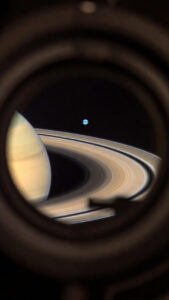
The “trick” is simple: Find Saturn first its steady light contrasts with twinkling stars—then zoom in. In a telescope, Saturn shows its rings tilted modestly, while Neptune appears as a small disk. No dramatic fireworks, but the symbolic weight is immense: two distant worlds aligned at the zodiac’s genesis.
Best viewing: Clear, dark skies away from light pollution, 30 60 minutes after full darkness. Apps like Stellarium or SkySafari pinpoint positions for your area
The Rarity and Deeper Significance of This Alignment
It’s not apocalyptic but transformative: Saturn tempers Neptune’s fog, urging practical idealism. Collectively, it may highlight leadership rebirths, boundary redefinitions (physical or metaphorical), or creative disciplines manifesting en masse.
On personal levels, it prompts grounding visions turning fantasies into actionable plans. The effects unfold gradually over months and years, peaking in influence through the Saturn-Neptune cycle until ~2061.
This rarity last potentially millennia ago makes February 20, 2026, a “once-in-many-lifetimes” marker, echoing ancient turning points in human consciousness.
Embracing the Moment: Viewing Tips and Forward Reflections
To engage: No fancy gear needed for Saturn step outside evenings or mornings, locate Aries (near the Pleiades or bright stars), and spot the steady light. With binoculars, hunt Neptune nearby it’s a quiet thrill knowing you’re witnessing the alignment astrologers hype as historic.


Leave a Reply